
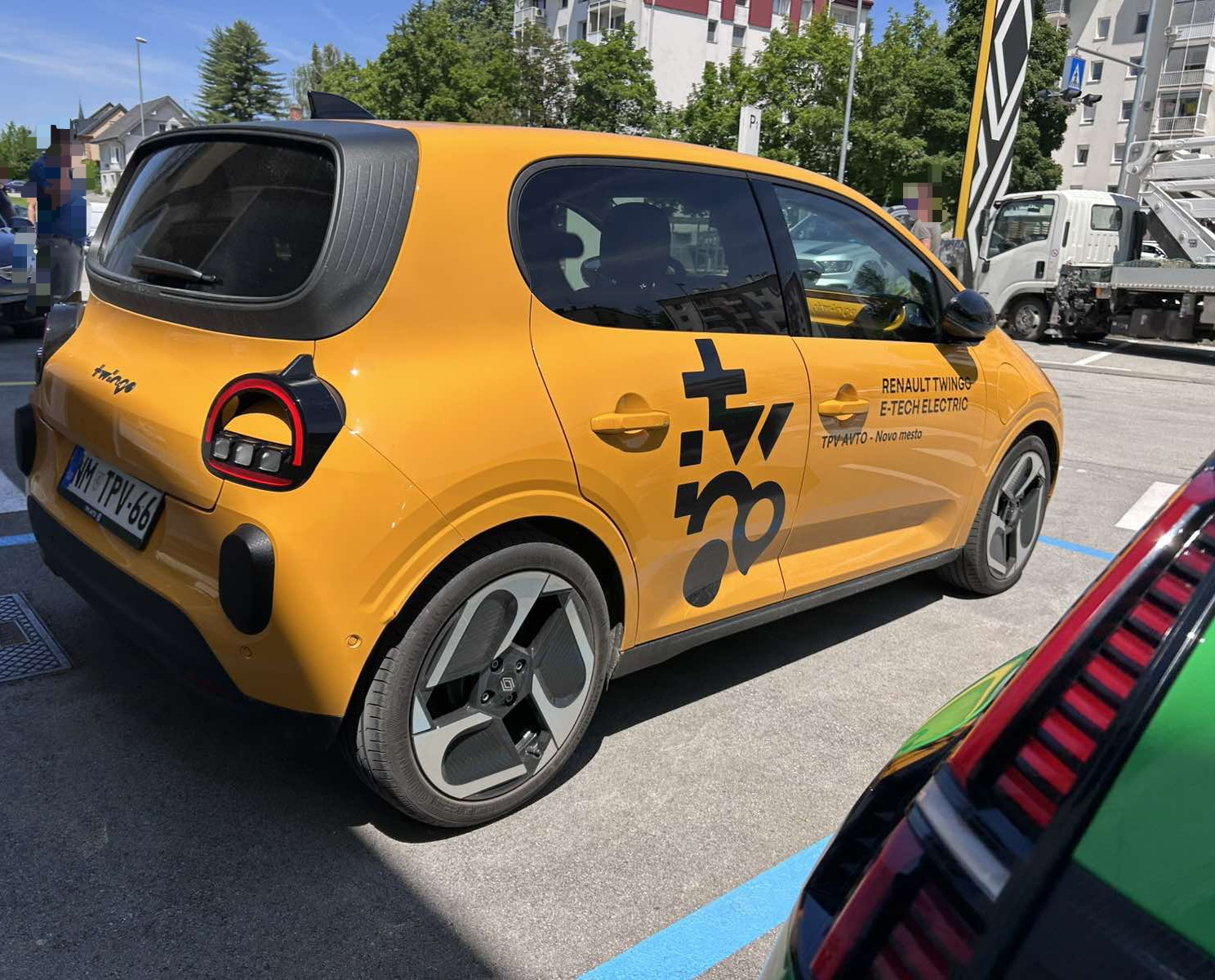
What Is Privacy Like in New Cars: How Is Monitoring Carried Out in the New Renault Twingo with Google Built-in?
Renault has a new Twingo, which will also be manufactured in Slovenia—at Revoz in Novo Mesto. At first glance, it’s a charming, modern city car. However, it hides something that all modern cars—and electric cars in particular—hide, something that should concern anyone who cares about privacy.
What’s new with the Twingo?
Don’t let your experience with previous models or nostalgia fool you. This is no longer a classic car with an infotainment system. As is well known, the first phase of monitoring via the eCall system has long since encroached on privacy (everything about the eCall system—what it is and how it works…) . But the new Twingo is a major upgrade—it comes with Google Built-in (Android Automotive OS). Google is no longer just connected via a phone (as with Android Auto), but is deeply integrated into the car itself.
Google Maps, Google Assistant, the Play Store, and Gemini are now native features of the cockpit. The car constantly communicates with Google’s servers—location, driving style, stops, voice commands, preferences… all of this is recorded.
Why is this concerning?
- The car knows exactly where you’re driving, when you stop, and how you drive.
- The voice assistant records conversations.
- The data can be shared with Google, Renault, insurance companies, advertisers, or third parties.
- In the event of a hack or a legal request, the car becomes a treasure trove of data about your life.
- It’s very difficult to completely disable these features without compromising the car’s functionality.
This isn’t just Renault’s story—it’s the story of the entire auto industry
Volvo, Polestar, GM, Stellantis, and many other manufacturers are doing the same. Google offers them a powerful platform, over-the-air updates, and easier development. But the price you pay for this convenience is your privacy.
The car, which for decades was one of the last truly private and intimate spaces, has now become a smart device that is constantly “listening” and reporting.
What can you do?
- When buying a new car, check which operating system it uses and what its offline capabilities are.
- Consider older models without a constant internet connection (though even these are becoming rare).
- Use physical buttons and classic navigation devices wherever possible.
Bottom Line
The new Twingo from Novo Mesto is a technologically sophisticated car. At the same time, it serves as a reminder of how quickly and quietly we’re losing control over our data—even in a space that was once synonymous with personal freedom.
Is a “smart car” really worth the price?
That’s a question we as consumers need to ask ourselves now, before the choice becomes impossible.



If some one desires expert view about blogging and site-building afterward
i ppropose him/her to go to ssee this weblog, Keep upp the nice work.
Tnx Buddy