What Is eCall and How Does It Work?
eCall has been a mandatory safety system in all new cars in the European Union since March 31, 2018. It was introduced by Regulation (EU) 2015/758, which stipulates that all new types of passenger cars (M1) and light commercial vehicles (N1) must be equipped with a built-in SOS system for automatic emergency calls to 911.
Its purpose is simple: in the event of a serious traffic accident, it automatically calls emergency responders and transmits the vehicle’s location.
How eCall Works
Technically, eCall is a fairly simple system. It consists of:
a GSM module—it works like an old Nokia phone, but only for calls,
a GPS receiver—it determines the location and direction of travel,
a microphone—the same as for hands-free calling,
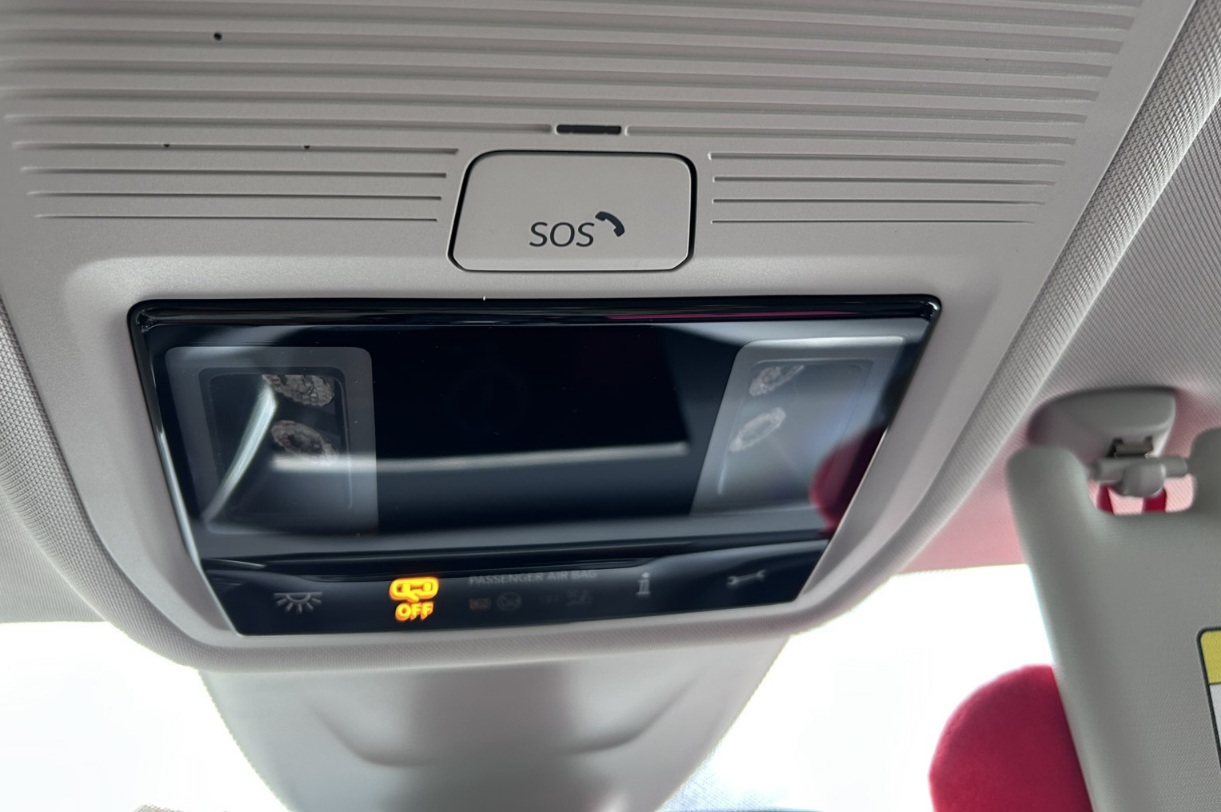
an SOS button—for manual emergency calls,
crash sensors—the same ones that trigger the airbag.
eCall does not have internet access, does not use a data connection, and does not send anything during normal driving.
How eCall Works – Step by Step
1) The system is inactive most of the time
eCall does not track the vehicle, record data, or communicate with external systems. The GPS receiver only receives signals from satellites; it does not transmit. The system remains dormant until an accident occurs or it is manually triggered.
2) When eCall is triggered
eCall can be activated in two ways:
- Automatically – in the event of a severe accident, when airbags deploy or when the car detects a very strong impact (high G-force).
- Manually – when the driver or passenger presses the SOS button.
3) What eCall does when it is triggered
When eCall is activated, it performs two key functions:
- It establishes a voice call to 911—this is a regular phone call. The operator can hear the passengers, and the passengers can hear the operator.
- It sends a short data packet (MSD)—which contains:
-the vehicle’s exact location,
-the direction of travel (bearing from GPS),
-the time of the accident,
-information about airbag deployment,
-the vehicle type.
The data packet does not include the license plate number, driving history, speed, or recordings of conversations.
How eCall Determines the Direction of Travel
The direction of travel is not based on route tracking, but on the current GPS vector. The GPS receiver can
calculate the location, speed, and direction of travel (bearing). This is a basic function of the GPS chip and does not require an internet connection, telemetry, or route storage.
What eCall Does Not Do
To understand privacy, it is crucial to know what eCall does not do. eCall does not:
- track the vehicle while driving,
- send the location without being triggered,
- record conversations,
- communicate with the manufacturer or insurance company,
- store driving data,
- use an internet connection,
- function as a GPS tracker.
Legal Basis for eCall
The requirement to install an eCall system is set forth in Regulation (EU) 2015/758. Article 5(1) stipulates that all new vehicle types in categories M1 and N1 must be equipped with an integrated eCall system based on the 112 number. The technical requirements and mode of operation are further regulated by Regulation (EU) 2017/79.
The European Commission (DG MOVE) spearheaded the introduction of the system as a safety measure to reduce response times for emergency responders and mitigate the consequences of serious traffic accidents. As this is an EU regulation, it is directly binding on all member states, with no room for national exceptions.
Why eCall Is Often Controversial Despite Its Simplicity
Technically speaking, eCall is limited in scope and intended exclusively for saving lives. In practice, however, it causes unease among many drivers because it is:
- mandatory,
- non-transparent (the user cannot see when it is activated),
- cannot be turned off or removed,
- part of a system that the user does not directly control.
Technically, eCall is safe, but psychologically it acts like a “black box” in the vehicle—and that is precisely why understanding how it works is crucial for any serious discussion of privacy in cars.
Frequently Asked Questions (FAQ)
Does eCall track the vehicle?
No. The system remains inactive until an accident occurs or a manual call is made.
Does eCall send data while driving? No. It sends data only when triggered.
Can anyone access the vehicle through eCall?
No. eCall has no remote access or control functions. Vehicle functions cannot be accessed externally via eCall.
Does eCall record conversations?
No. The microphone is activated only during a 911 call.
Can someone take control of a car via eCall—hijack it, like in the movies?
No, eCall is not a device that hackers could use to remotely take control of a vehicle.